
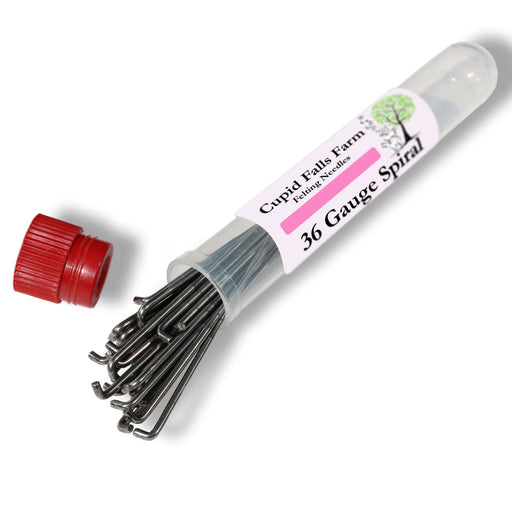
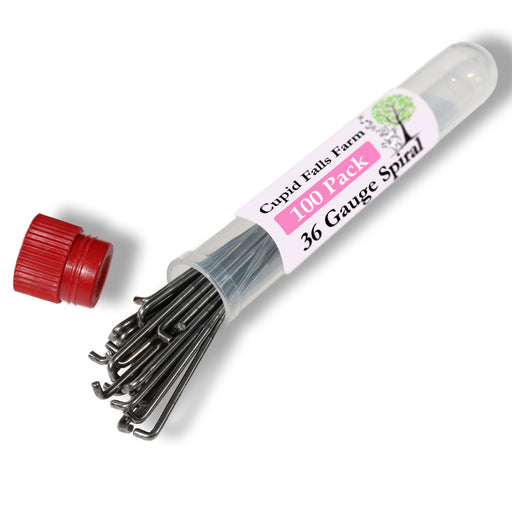
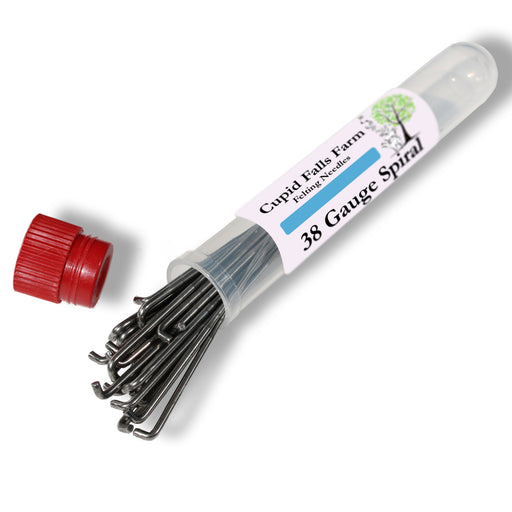
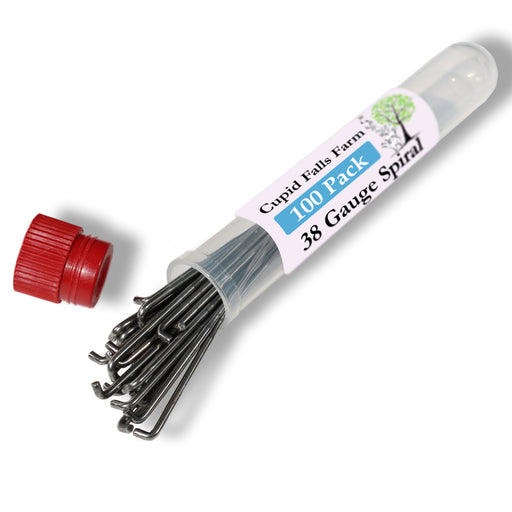
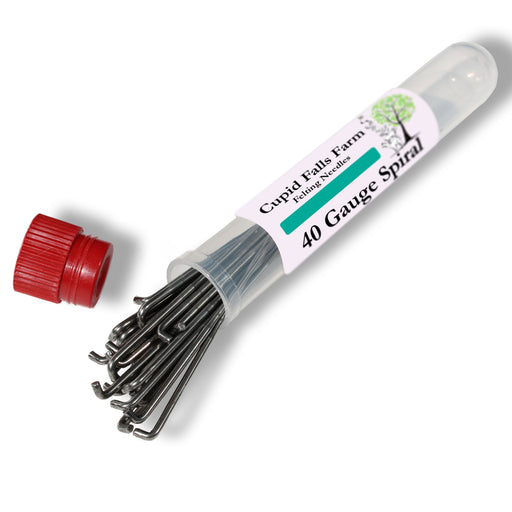
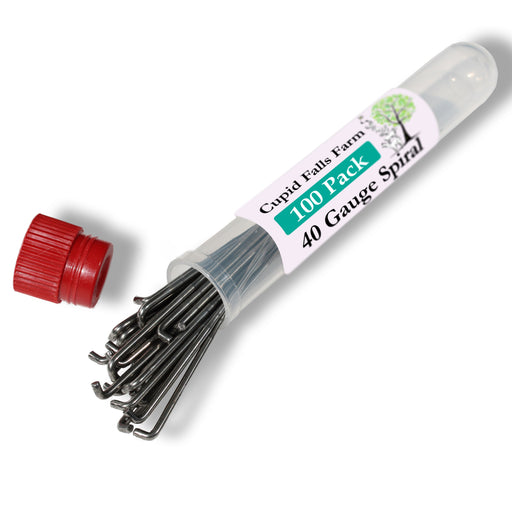
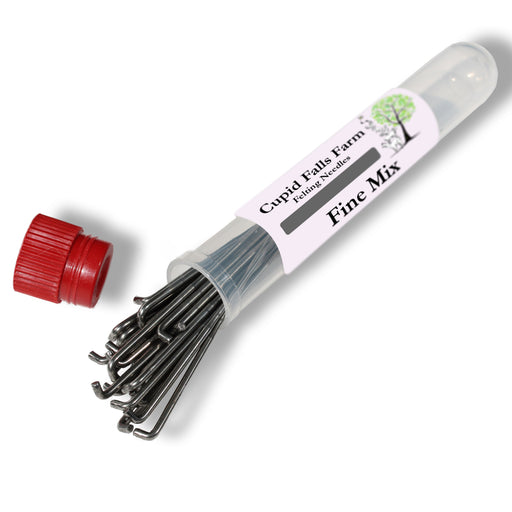
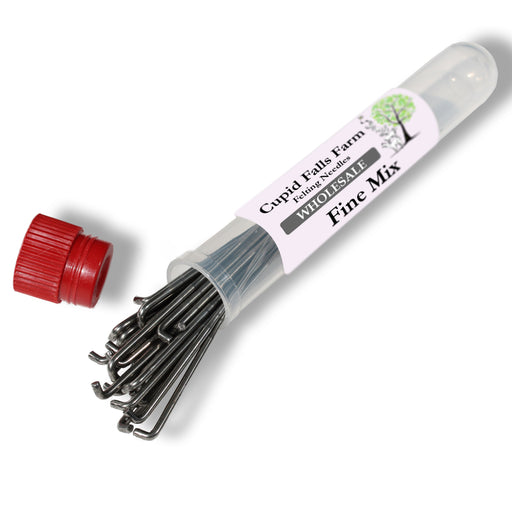
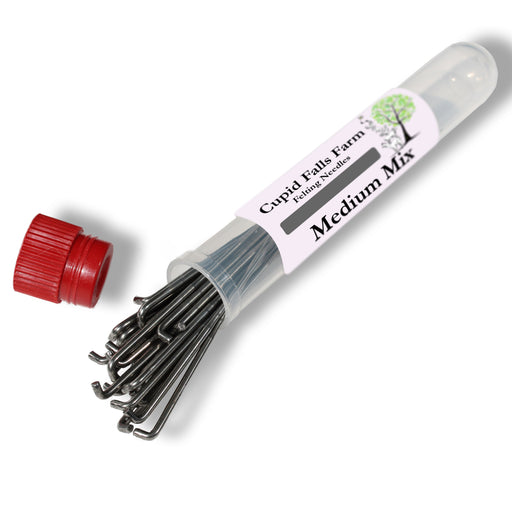
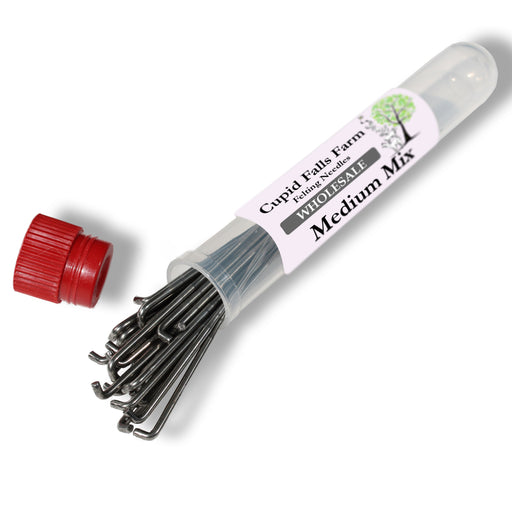
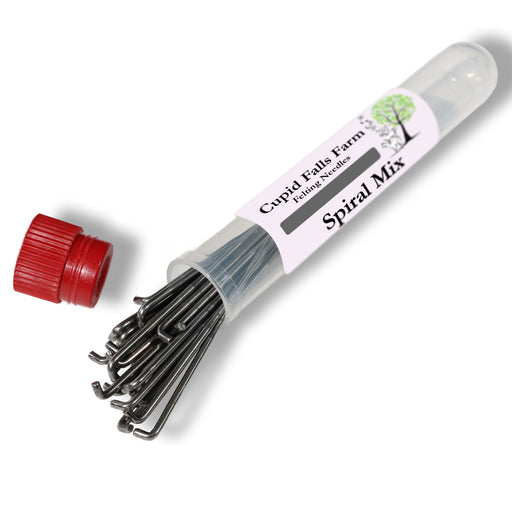
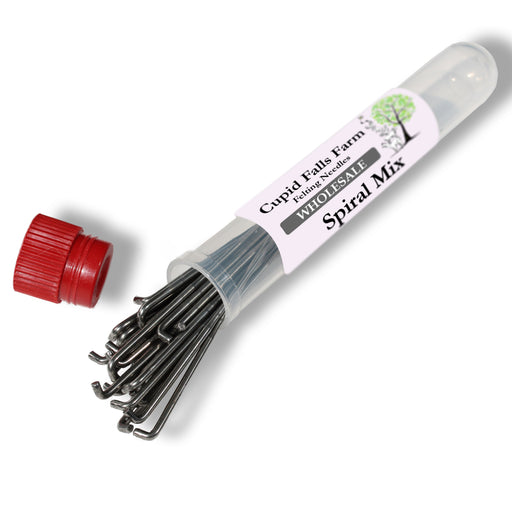
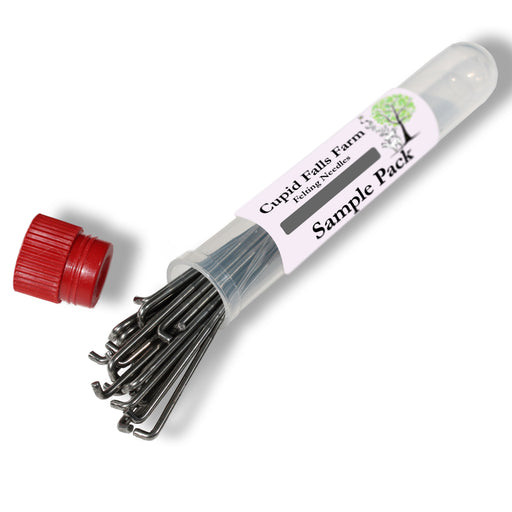
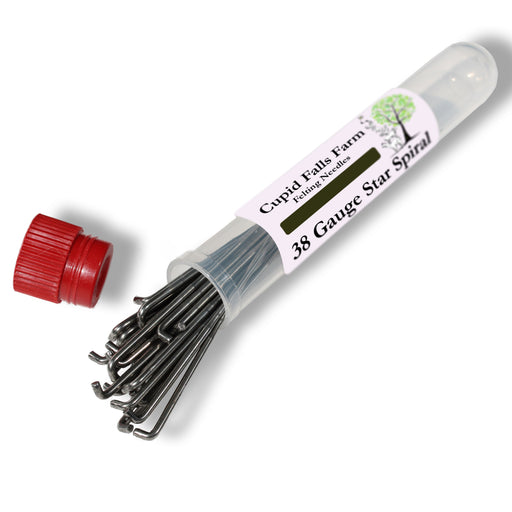
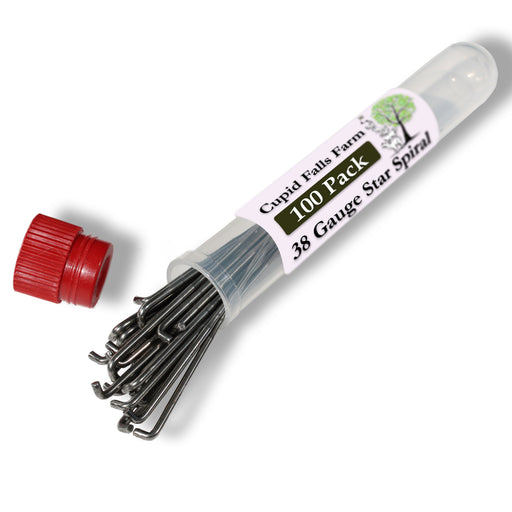
Spiral felting needles are made by twisting the shaft of a standard triangular needle. This creates a spiral arrangement of barbs around the needle, allowing fibers to be engaged from multiple angles during each insertion.
This design improves efficiency and reduces the linear “track marks” that standard needles can leave behind.
How Spiral Needles Work
Because the barbs wrap around the needle in a spiral, they:
- Catch fibers more evenly from all sides
- Reduce drag and resistance during use
- Distribute felting action more uniformly
The result is smoother felting with fewer visible needle lines, especially on larger or more uniform surfaces.
When to Use Spiral Needles
Spiral needles are useful throughout the felting process but are especially effective for:
- Faster shaping and core felting
- Smoothing larger surfaces
- Reducing visible needle marks
- Achieving a more even finish
They are often used as an alternative to standard triangle needles when efficiency and surface quality are priorities.
Spiral vs Triangle Needles
Spiral needles are essentially a modified version of triangle needles. Both are used for shaping and compacting fibers, but:
- Triangle needles felt in straight lines and can leave more visible needle marks
- Spiral needles engage fibers from multiple angles, resulting in smoother, more even felting
Why Choose Spiral Needles?
Spiral needles are a great option if you want:
- Faster felting speed
- Less resistance while working
- Cleaner surface results with fewer visible lines